Project
Project
Ancient Temple
Ancient Temple
Overview
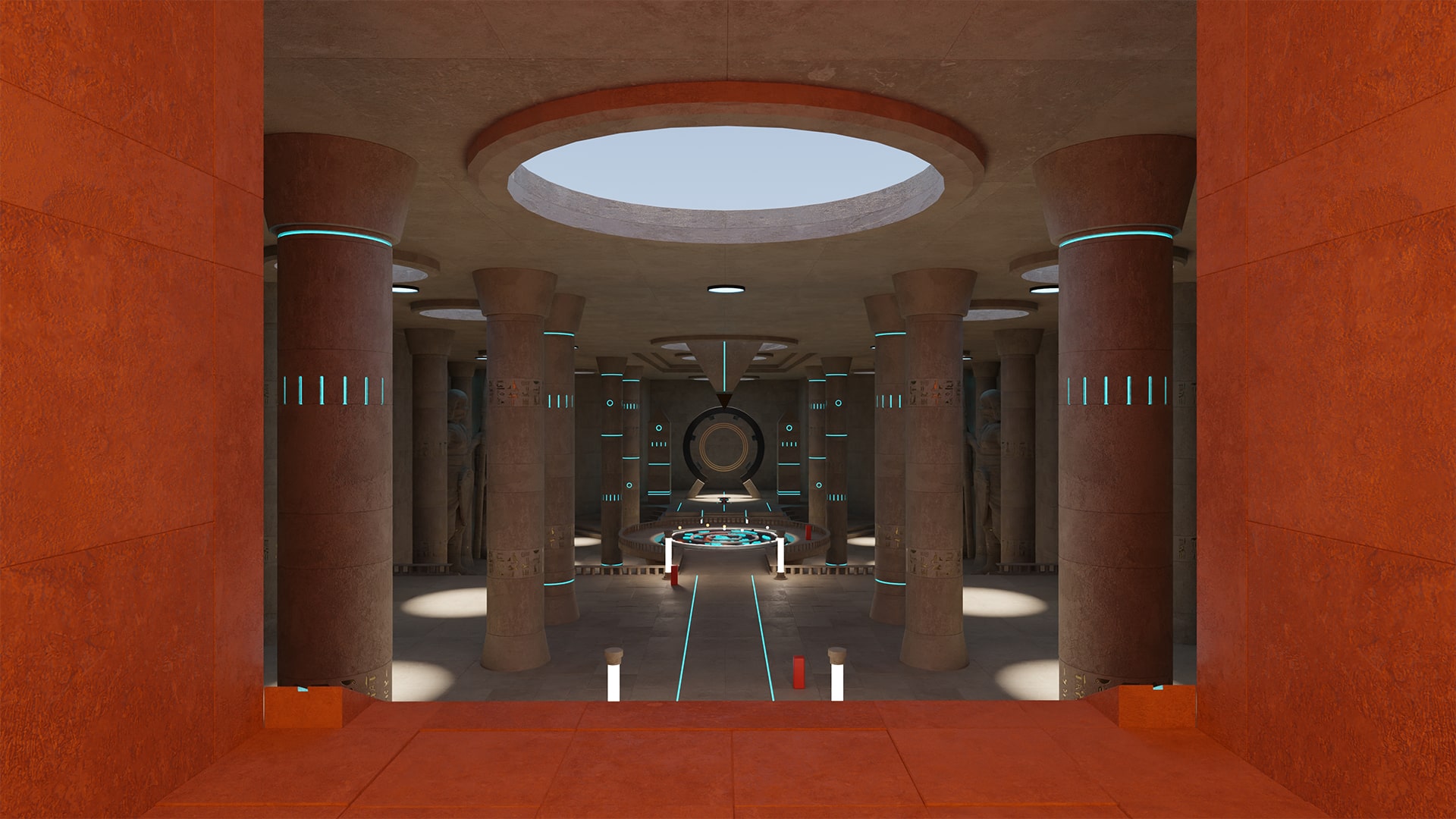
As brands increasingly look to integrate AR (Augmented Reality), VR, and real-time WebGL experiences into their digital strategy, standard high-poly 3D renders become obsolete. The objective was to engineer an optimised, real-time-ready spatial environment capable of running at high framerates without sacrificing visual fidelity or architectural scale.
Overview
As brands increasingly look to integrate AR (Augmented Reality), VR, and real-time WebGL experiences into their digital strategy, standard high-poly 3D renders become obsolete. The objective was to engineer an optimised, real-time-ready spatial environment capable of running at high framerates without sacrificing visual fidelity or architectural scale.
Overview
As brands increasingly look to integrate AR (Augmented Reality), VR, and real-time WebGL experiences into their digital strategy, standard high-poly 3D renders become obsolete. The objective was to engineer an optimised, real-time-ready spatial environment capable of running at high framerates without sacrificing visual fidelity or architectural scale.
Execution
Operating as an internal technical study, we developed a fully modular architectural system. The strategic focus was on utilizing advanced game-engine workflows—specifically leveraging texture trim sheets, modular instancing, and optimised lighting bakes—to create a sprawling, cohesive environment with a minimal digital footprint.
Execution
Operating as an internal technical study, we developed a fully modular architectural system. The strategic focus was on utilizing advanced game-engine workflows—specifically leveraging texture trim sheets, modular instancing, and optimised lighting bakes—to create a sprawling, cohesive environment with a minimal digital footprint.
Execution
Operating as an internal technical study, we developed a fully modular architectural system. The strategic focus was on utilizing advanced game-engine workflows—specifically leveraging texture trim sheets, modular instancing, and optimised lighting bakes—to create a sprawling, cohesive environment with a minimal digital footprint.
Proof of Concept
This spatial computing prototype demonstrates the technical infrastructure required for the next generation of brand experiences. By mastering real-time optimization workflows, we equip forward-thinking brands with the capability to deploy interactive virtual showrooms, immersive web environments, and scalable AR assets directly to their consumers.
Proof of Concept
This spatial computing prototype demonstrates the technical infrastructure required for the next generation of brand experiences. By mastering real-time optimization workflows, we equip forward-thinking brands with the capability to deploy interactive virtual showrooms, immersive web environments, and scalable AR assets directly to their consumers.
Proof of Concept
This spatial computing prototype demonstrates the technical infrastructure required for the next generation of brand experiences. By mastering real-time optimization workflows, we equip forward-thinking brands with the capability to deploy interactive virtual showrooms, immersive web environments, and scalable AR assets directly to their consumers.
More projects
More projects






© MadeReality Ltd.
Privacy
Terms of use
© MadeReality Ltd.
Privacy
Terms of use
© MadeReality Ltd.
Privacy
Terms of use
© MadeReality Ltd.
Privacy
Terms of use
